


This article is based on personal experience. Names have been changed to protect privacy. This piece contains references to emotional manipulation and suicidal ideation used as interpersonal leverage.
Yenis Monterrey favorite products HERE
I want to start with the ending, because the ending is the part that finally made everything make sense.
After twenty-four years. After a decade of documented incidents. After a phone call screamed at my husband over a snowstorm. After insulting texts sent to me during a family visit. After a night she reportedly spent on the floor of her apartment declaring that I was destroying the family because we went hiking.
After all of that, she grabbed me near my neck after breathwork class in Austin, Texas. Told me I was full of myself. Shook with rage in front of strangers who had just shared their most vulnerable stories in a healing circle.
And then when I walked away, when I called my husband and told him what happened, when the story could no longer be controlled she told him she had thought about suicide.
Then, two days later, she sent him a cheerful text from a cemetery. “I made it back ok!! Feeling better! Hugs!” With a photograph of a grave and a smiling emoji.
I have spent my career in rooms where stories are told and evidence is evaluated and the distance between what people say and what they do is the most important territory of all.
I am also a mental health advocate who meditates daily, goes to therapy, and has built her platform on the belief that inner work is the most important investment a human being can make.
And I am telling you: twenty-four years was enough.
This is that story. And if you are reading it with a specific face in your mindset with me.

Who She Was Before I Understood What I Was Dealing With
She was my sister-in-law.
My sister in law had chronic fatigue syndrome now formally termed Systemic Exertion Intolerance Disease by the National Academy of Medicine, a condition affecting an estimated 836,000 to 2.5 million Americans. It is real. It is debilitating. It deserves genuine compassion and informed care.
I gave her both. For twenty-four years.
She was also, by her own description, profoundly spiritual a woman who claimed to receive direct guidance from her deceased father, who invested significantly in psychic readers and holistic practitioners, who positioned herself as someone operating on a plane of awareness beyond the ordinary.
She was in her late sixties. She had never married. She had no children. Her twin sister was her closest companion. Their father a man who called them the girls with the tenderness of someone who never stopped seeing them as his daughters had been her emotional anchor until his death. Her relationship with her mother was painful and unresolved.
What I understand now, that I could not have articulated in the early years, is that I was not navigating a difficult personality. I was navigating an entire psychological architecture built from childhood wounds, complicated grief, untreated trauma, and decades of relational patterns that had never been examined honestly.
Her inner child was not a metaphor. Her inner child was present in every incident, every eruption, every manipulation. She was a little girl who had never received what she needed, grown into a woman who had never processed what that cost her, now in her late sixties still running the same patterns with increasing intensity, because unexamined wounds do not diminish with time. They calcify.
Yenis Monterrey favorite products HERE
The Two Fortresses: Illness and Spirituality
My sister in law relational world was protected by two structures so interlocking and so reinforcing that challenging one always activated the other.
The first was chronic illness.
Psychologists call it secondary gain, the phenomenon whereby genuine illness begins, over time, to serve social and psychological functions beyond the physical. According to research published in the Journal of Psychosomatic Research, secondary gain patterns appear significantly more often in individuals with underlying narcissistic personality structures, where illness evolves into a strategic identity: an explanation for everything, a shield against accountability, and a moral position from which no one is socially permitted to dislodge them.
Her chronic fatigue was real. I never doubted that.
What I came to understand was that it had also become her answer to everything. Too fatigued to engage with her only nephew’s childhood not one comment, not one like, across years of his birthdays and milestones. Too ill to join a family hike. Not, however, too ill to spend an entire night on the floor, screaming, after we were delayed by a snowstorm.
The illness that limited her in one direction had no limiting effect whatsoever in the other.
The second fortress was spirituality.
The concept of spiritual bypassing was first named by psychologist John Welwood in 1984 “the use of spiritual practices and beliefs to avoid dealing with our painful feelings, unresolved wounds, and developmental needs.” Dr. Robert Augustus Masters, in his foundational work Spiritual Bypassing: When Spirituality Disconnects Us From What Really Matters, identifies its defining markers: explosive reactivity alternating with performed serenity, compulsive victimhood, the reframing of accountability as spiritual persecution, and the use of mystical practice as a substitute for genuine psychological development.
She claimed to communicate with her deceased father. She invested heavily in psychic readers. She surrounded herself with holistic practitioners.
From the outside, this projected depth and sensitivity.
From the inside of a twenty-four-year relationship with her, what it actually constructed was a closed system, one where her behavior was always already validated before any living person could respond to it honestly. The dead cannot be cross-examined. The psychic always confirms. The ritual always soothes.
Real inner work does none of those things.
The meditation practice I maintain, the therapy I attend, the somatic work I invest in none of it tells me I am right. It asks whether I am the problem. It holds the mirror at an angle I did not choose and did not always want.
She never sat in that room. And the longer she avoided it, the more elaborate the fortress around the avoidance became.
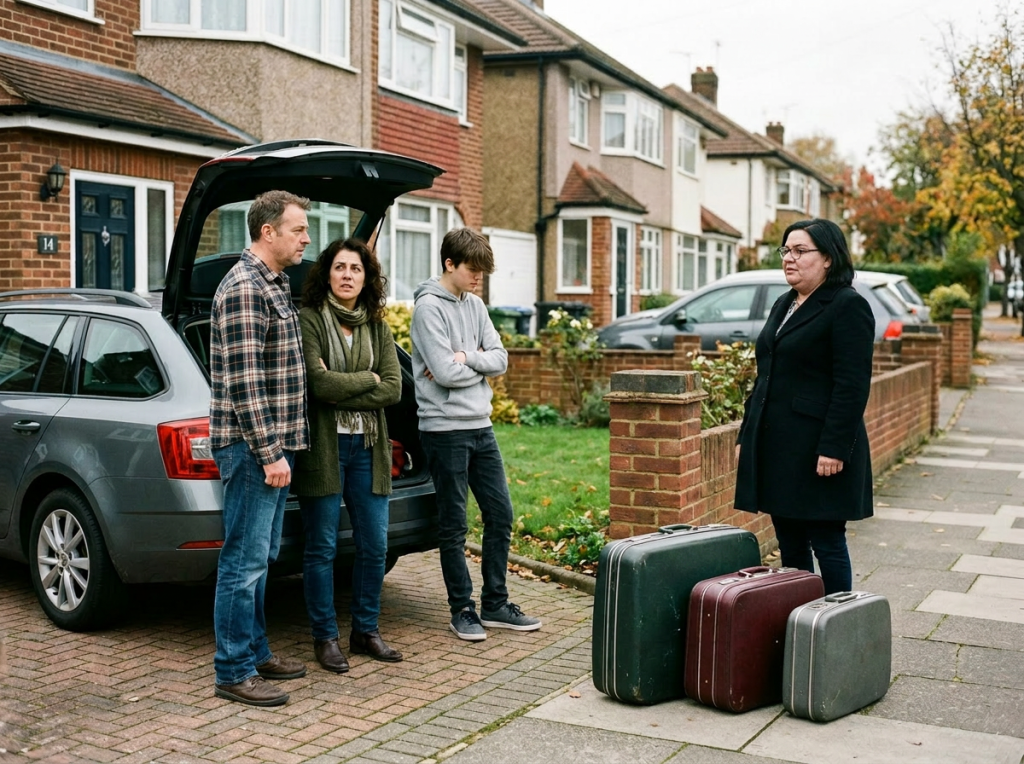
24 Years of Incidents, Documented With Journalistic Precision
Yenis Monterrey favorite products HERE
Incident One. She raged at my husband not me, but my husband, in the triangulation pattern because I would be ten minutes late to a family gathering. The target was him. The message was for me. This is how triangulation works: the person deploying it maintains the appearance of reasonableness while ensuring the emotional consequences land precisely where intended.
Incident Two. I removed her from my private social media after she had never once engaged not a single like, not a single comment with any photograph of her only nephew across years of his childhood. When I told her directly and honestly why, she did not ask questions. She did not reflect. She erupted.
In psychologically healthy attachment systems, when someone says “I felt unseen,” the response is curiosity or repair. In personalities organized around grievance and narcissistic injury, that same statement lands as annihilation because accountability, for someone whose entire identity depends on being the one who was wronged, is existentially threatening.
Incident Three -Illinois, 2021. My husband, my teenage son, and I hiked a national park during a family visit. I had extended the invitation. She declined. A snowstorm delayed our return. We called ahead.
She screamed at my husband by phone. She sent insulting messages to me by text.
The following morning, her twin sister informed me she had spent the night on the floor crying, meditating, screaming declaring that I was destroying the family.
I told her after that incident I was cutting ties.
Four years of silence followed, four of the most professionally and personally expansive years of my life.
Yenis Monterrey favorite products HERE
The Austin Visit: Reconnection, Breathwork, and the Moment Everything Broke Open
In 2025, she began reaching out cards, tentative texts. I responded. Because grace is a value I hold and because twenty-four years of shared history deserves at least one genuine attempt at repair.
By 2026, she visited me in Austin.
I brought my whole self to that reunion. My career. My community. My achievements. My joy. I am a journalist with seven consecutive seasons of Formula 1 press credentials. I am the founder of a thriving Austin community. I am a lifestyle creator and mental health advocate who has built something real. I shared it with her not to compete, but because that is who I am, and I had decided I would not perform smallness in my own life to manage someone else’s discomfort with my fullness.
She pretended to listen. Changed subjects when I asked questions. The body language of someone who cannot celebrate another person is unmistakable once you have learned to read it.
On the third day, I brought her to a breathwork class. An intentional, generous gesture the kind only someone genuinely invested in another person’s healing would make.
In that circle, I was present and engaged. People were drawn to me. I mentioned warmly that my sister-in-law and I were reconnecting after four years.
After the session, I offered a gentle observation: that everyone in the room carried difficulty, but some people find ways to move through it while others remain anchored to it.
She grabbed me by the shoulder. Hard. Her hand reached toward my neck.
I told her not to touch me.
She told me “I was full of myself.“
I did not match her energy. I did not escalate. I told her to calm down and step away. I called my husband and told him exactly what had happened.
That restraint that regulated, boundaried, non-reactive response is not something that comes naturally in a moment of physical confrontation. It is the product of years of genuine inner work. Therapy. Meditation. The slow, unglamorous practice of learning to stay grounded when someone else’s chaos is reaching for you.
I am proud of that moment. Not because I was calm. Because I had done the work to be capable of calm when it mattered most.
What Happened After: The Clinical Picture Completes Itself
Yenis Monterrey favorite products HERE
What followed the breathwork incident revealed, in rapid succession, everything the previous twenty-four years had only suggested.
She admitted to my husband that she had overreacted when she grabbed me. An admission significant enough on its own because in two and a half decades, accountability of any kind had been essentially absent.
But then she told him she had been thinking about suicide.
And then, two days later, she sent him a warm, emoji-filled text from a cemetery. “I made it back ok!! Just at the cemetery, I hope you are doing ok. I am feeling better! Take care, hugs.” With a photograph of a grave and a smiling face.
My husband, who is a caring and conscientious person, was genuinely alarmed. He had given her specific instructions to contact him when she arrived home safely. She did not. The silence lasted days. And when contact finally came, it arrived not as reassurance but as a carefully composed image cemetery, flowers, American flag, the grave of their shared familymdelivered with the cheerfulness of someone who understood exactly what they were communicating.
Let me name what this is clinically, because it deserves to be named.
Suicidal ideation as interpersonal leverage is documented in the psychological literature as distinct from genuine suicidal crisis. Research in the field of personality disorders, including work published in the Journal of Personality Disorders, identifies a pattern in which suicidal statements are deployed in the immediate aftermath of interpersonal conflict specifically directed at family members of the person the individual has just harmed as a mechanism to redirect emotional resources, generate guilt, and reframe the perpetrator as the victim requiring urgent care.
The clinical markers that distinguish this from genuine crisis include: rapid resolution without professional intervention, the presence of an audience for the disclosure, the timing immediately following a conflict where the person was held accountable, and the swift return to ordinary functioning in this case, a cemetery visit cheerfully documented and shared within 48 hours.
This is not a diagnosis. I am not her clinician. But I’m a mental health advocate, and I am capable of reading the literature and recognizing a pattern that has a name.
The cemetery text is also its own clinical artifact. It communicates elegantly, in the language of grief and devotion “I am the one who tends to the dead. I am the one who remembers. I am the one who suffers and still shows up” It is martyrdom, documented and delivered directly to my husband’s phone.
She also revealed to him, in this same window, that she had been jealous of our travels for years. That she had never had fun. That she could have taken more from the family inheritances but chose not tooffered not as virtue but as grievance, one more sacrifice uncredited in a collection spanning decades.
The psychological term for this cumulative pattern the illness, the spiritual bypass, the triangulation, the physical altercation, the suicidal disclosure as leverage, the martyrdom performance, the cheerful recovery is complex manipulation through emotional dysregulation, characteristic of individuals with borderline and narcissistic personality features operating within a family system that has never held them accountable.
Twenty-four years. And it took her four days in Austin to show me everything at once.
Why I Am Proud of How I Responded
Yenis Monterrey favorite products HERE
I want to say this clearly, because the mental health advocacy space sometimes forgets to honor the person who held the line.
I did not scream back. I did not match her energy. I did not send escalating texts or attempt to involve other family members or construct a counter-narrative in real time.
I told her not to touch me. I told her to calm down and walk away. I called my husband. I documented what happened. And then I made a clear, regulated, informed decision.
That is not nothing. That is everything.
For anyone who has ever stood in a moment like that one physically confronted, emotionally provoked, twenty-four years of history pressing on your nervous system and managed to stay grounded: you know how much work that represents. You know what it cost. You know that the absence of reaction is sometimes the most powerful thing you can do.
I am proud of myself. Not because I was perfect. Because I was prepared by years of genuine inner work to be the person I needed to be in that moment.
The Decision: No Contact, No Apology, No Ambiguity
I chose no contact.
Not in anger. Not impulsively. In the clear, deliberate way that only becomes possible when you have done enough inner work to know the difference between a reaction and a decision.
Research published in Personality and Individual Differences is unambiguous: sustained contact with chronically dysregulated individuals produces measurably elevated rates of anxiety, depression, and somatic illness in the people around them. For those of us who take our mental health seriously who understand allostatic load, nervous system regulation, and the documented physiological consequences of chronic relational stress no contact is not a dramatic gesture.
It is a clinical recommendation.
And I am grateful genuinely, without irony that she lives far away. The geographic distance that might once have felt like a limitation of our relationship now feels like the clearest possible gift. My nervous system, my marriage, my community, my work, my joy none of these have to share a zip code with her chaos.
That is not cruelty. That is discernment.
A strong support system made this decision possible and sustainable. My husband, who witnessed the incident, understood what happened and stood with me. My community, built on genuine connection and mutual care. My mental health practice, which gave me the language, the frameworks, and the regulated nervous system to navigate this without losing myself in it.
If you do not yet have that support system building it is the most important work you can do. Not for moments of crisis. For the ordinary Tuesday when you need someone who knows your story and can remind you that your perception is accurate and your boundary is valid.
What Her Story Is Actually About - And Why It Matters For Yours
Yenis Monterrey favorite products HERE
I want to offer compassion here, because I mean it.
She was a little girl with a complicated mother and a father she adored and a life that did not take the shape she may have imagined. She arrived at her late sixties carrying wounds that were real, grief that was real, and an inner child that had never been given the tools to heal.
None of that is her fault.
What is her responsibility what is every adult’s responsibility, regardless of wound or illness or loss is the choice to seek genuine healing rather than performing it. To sit with a licensed therapist rather than a psychic. To do the uncomfortable work of self-examination rather than constructing an identity so fortress-like that no honest feedback can penetrate it.
That choice is available to her. It has always been available to her.
She has not made it. And I cannot wait twenty-four more years to see if she will.
Your wounds explain your behavior. They do not excuse it. And they do not obligate the people you harm to remain within reach while you avoid healing them.
If You Are Reading This With Someone Specific in Mind
You are not alone. You are not wrong. And you are not too sensitive.
If someone in your life uses chronic illness as an accountability shield while demonstrating explosive energy in conflict if they claim spiritual depth while showing zero capacity for relational repair, if they use suicidal statements as interpersonal leverage after being held accountable, if they perform martyrdom in the language of grief and devotion, if they experience your joy and your fullness and your lived life as a personal attack.
You are dealing with a closed system. And closed systems do not open because you give them more access to yourself.
Build your support system. Go to therapy. Maintain your meditation practice. Document what happens. Trust your perception. And when you have exhausted every genuine option available to you, choose yourself, without apology, without ambiguity, and without looking back.
That is not abandonment. That is survival. And sometimes, survival is the most spiritual act available to you.
Yenis Monterrey is an entertainment journalist, mental health advocate, lifestyle creator, and community builder based in Austin, Texas. She holds seven consecutive seasons of Formula 1 press credentials at Circuit of the Americas and has covered Sundance, SXSW, Tribeca, and the Austin Film Festival. She is the founder of ATX Small Dogs, a curated small dog community in Austin, and the voice behind the longevity and wellness platform @yenismonterrey on IG & TikTok.She writes about culture, wellness, mental health, and reinvention at vipdiscoveries.com.
Yenis Monterrey favorite products HERE


 VIP Discoveries